Eating less is common when using a GLP-1 medication. But when you eat less, it becomes even more important to make sure your body is still getting the nutrition it needs.
One area that deserves more attention is gut health.
Scientists are learning more about the connection between GLP-1 medications, the foods we eat and the billions of tiny organisms that live inside our digestive system.
This is known as the gut microbiome.
So, what does the latest research tell us? And what can you do to support your gut while on a GLP-1 journey?
Your gut does more than digest food
Your digestive system doesn’t simply break down food.
Your gut contains billions of bacteria and other tiny organisms. Together, they are called the gut microbiome.
Many of these bacteria are helpful. They help break down certain foods and produce substances that may play a role in digestion and overall health.
This is where fibre becomes important.
Some types of fibre cannot be fully digested by your body. Instead, they travel to your large intestine, where certain gut bacteria can use them as food.
Scientists are now studying how this process may also be connected to the body’s natural GLP-1 system.
This research is exciting, but it is still developing.
It does not mean that eating more fibre works in the same way as taking GLP-1 medication.
Why fibre matters
Fibre is an important part of a healthy diet.
It can help support normal digestion and regular bowel movements.
This may be especially helpful because some people using GLP-1 medications experience digestive changes, including constipation, nausea or diarrhoea.
But there is something important to remember:
More fibre isn’t always better.
If you suddenly increase your fibre intake too quickly, you may experience bloating, gas or stomach discomfort.
A better approach is to increase fibre slowly.
Good sources include:
- Vegetables
- Fruit
- Oats
- Beans and lentils
- Whole grains
- Nuts and seeds
Choose a variety of foods rather than depending on one “superfood” or supplement.
Fibre and water work together
If you’re thinking about fibre, you should also be thinking about water.
When people eat less, they may also drink less without realising it.
For example, if you previously had a glass of water with every meal but you’re now eating fewer or smaller meals, your daily fluid intake may also drop.
Try to drink regularly throughout the day.
This is particularly important when exercising or during our hot South African summers.
If you have ongoing vomiting or diarrhoea, or you’re struggling to keep fluids down, speak to your healthcare professional.
What are scientists learning about GLP-1 and gut bacteria?
This is one of the interesting new areas of GLP-1 research.
A 2026 scientific review looked at 17 studies investigating GLP-1 medications and gut bacteria.
Researchers found some interesting changes in certain types of gut bacteria.
However, there is an important catch.
Only five of the studies involved humans. The other 12 were preclinical studies.
That means we still need much more human research before scientists can say exactly how GLP-1 medications affect the gut microbiome.
So, if you see a headline saying GLP-1 medication “improves your gut bacteria”, be careful.
The science isn’t that simple yet.
Can fibre naturally increase GLP-1?
Researchers are also studying whether certain types of fibre can affect the GLP-1 that our bodies naturally produce.
A 2026 review looked at 52 studies involving 1,085 adults.
Some types of fibre showed interesting results.
However, many of these studies were small and short. Results also differed depending on the type of fibre being studied.
More research is needed.
This is also why you should be careful of products claiming to be a “natural Ozempic” simply because they contain fibre.
Fibre is good for us, but it isn’t a replacement for prescribed GLP-1 medication.
Eating less? Make your nutrition count
One of the biggest nutrition lessons for anyone on a GLP-1 journey is simple:
When you’re eating less, what you eat matters even more.
Try to make your smaller meals count.
Think about including:
Protein to help support muscle.
Fibre to support digestive health.
Fruit and vegetables for vitamins, minerals and fibre.
Healthy fats as part of a balanced diet.
Water throughout the day.
You don’t need a perfect diet.
Small, consistent choices can make a big difference over time.
What do we know — and what are scientists still studying?
There are some things we already know quite well.
Fibre is an important part of a healthy diet. Drinking enough water matters. Eating a variety of nutritious foods is important. Regular movement and exercise also support overall health.
We also know that some people experience digestive side effects while using GLP-1 medications.
But there is still a lot we don’t know.
Scientists are continuing to study how GLP-1 medications may affect gut bacteria, food choices and the body’s natural hunger and fullness signals.
It’s an exciting area of research, but we shouldn’t turn early research into health claims before the evidence is strong enough.
5 simple habits to support your gut
- Increase fibre slowly. Give your digestive system time to adjust.
- Eat different plant foods. Variety is more important than chasing one trendy ingredient.
- Drink water throughout the day. Don’t wait until you’re extremely thirsty.
- Keep moving. Regular physical activity supports much more than weight loss.
- Pay attention to ongoing symptoms. Speak to your healthcare professional if you have ongoing constipation, vomiting, diarrhoea, severe stomach pain or difficulty eating and drinking.
Where does My Meal fit?
Good nutrition doesn’t need to become complicated when your appetite changes.
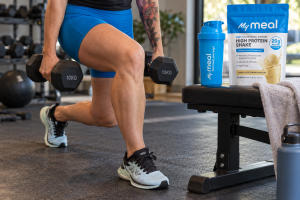
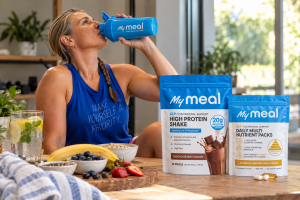
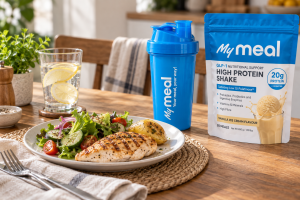
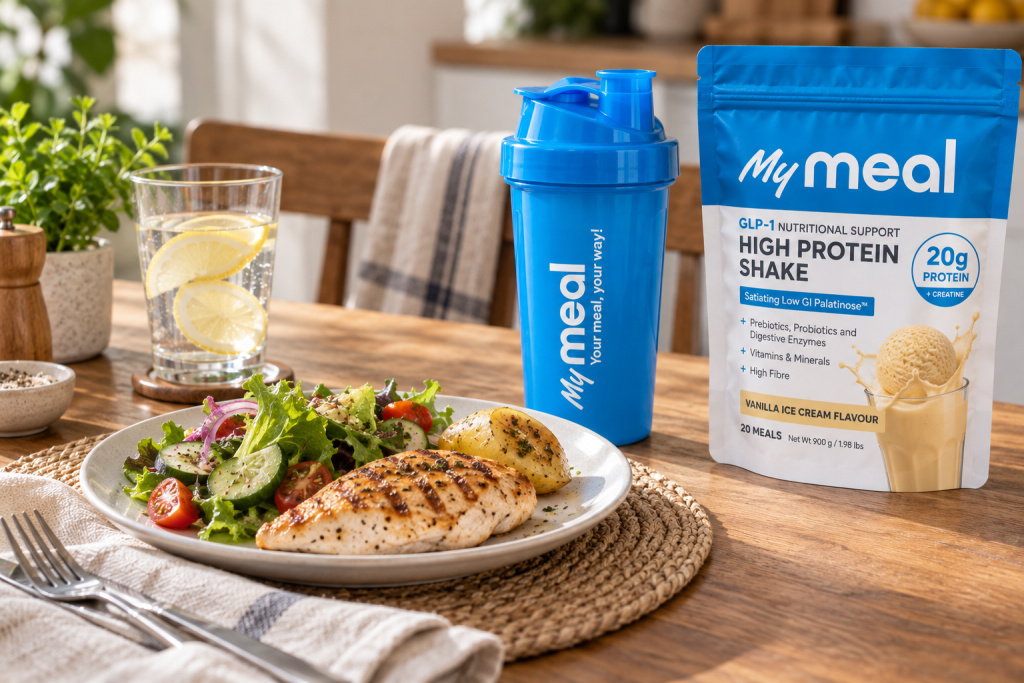
The My Meal High Protein Nutrition Shake provides 20 g of protein per serving, together with 3 g creatine monohydrate, dietary fibre, prebiotics and probiotics, vitamins and minerals.
It can offer a convenient nutritional option for times when your appetite is lower or eating a larger meal feels difficult.
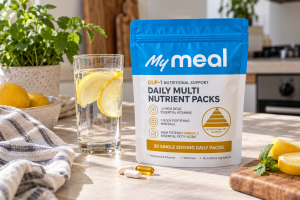
The My Meal Daily Multi Nutrient Pack provides 12 vitamins, 9 minerals and high-potency omega-3 to complement a varied, balanced diet.
My Meal products don’t replace healthy food, exercise, medical advice or prescribed medication.
They’re simply designed to help make everyday nutrition easier to manage during your GLP-1 journey.
Because eating less shouldn’t mean caring less about nutrition.
Research & Further Reading
2026 systematic review: Effects of GLP-1 agonists on the gut microbiota.
2026 review: Dietary fibre, natural GLP-1 production and feelings of fullness.
Joint expert advisory: Nutritional priorities for people receiving GLP-1 therapy.