Losing weight may be the goal, but losing strength shouldn’t be.
GLP-1 medications can help people lose a significant amount of weight. But when body weight drops, we don’t only lose body fat. Some lean tissue can also be lost.
This is why experts are paying more attention to muscle health during GLP-1-supported weight loss.
The good news? Two simple things may help: eating enough protein and doing resistance training.
Do you lose muscle while taking a GLP-1?
Some lean mass can be lost during weight loss, whether the weight loss comes from medication, diet or other methods.
A large 2026 review looked at 20 studies involving more than 15,000 people. Researchers found that lean mass made up part of the total weight lost with GLP-1-based treatments.
However, this wasn’t unique to GLP-1 medication. People losing weight through lifestyle changes also lost some lean mass.
The important message is not to fear weight loss.
Instead, we should think about the quality of the weight we lose.
Ideally, we want to lose excess body fat while supporting as much healthy muscle and physical strength as possible.
Why is muscle so important?
Muscle isn’t only about looking strong.
You use your muscles every day.
They help you:
- Walk and climb stairs
- Carry shopping bags
- Get up from a chair
- Exercise and play sport
- Maintain balance and movement
- Stay physically independent as you get older
Muscle also plays an important role in how your body uses energy and glucose.
This is why protecting your muscles can be an important part of healthy weight management.
What is resistance training?
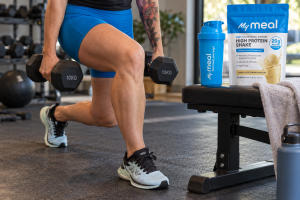
Resistance training simply means making your muscles work against resistance.
You don’t have to become a bodybuilder or spend hours in a gym.
Resistance exercise can include:
- Squats
- Lunges
- Push-ups
- Resistance bands
- Dumbbells
- Weight machines
- Body-weight exercises
The goal is to challenge your muscles so they have a reason to stay strong.
Why is strength training important on a GLP-1 journey?
When you lose weight, your body has less total mass to carry around.
If you’re also eating much less and not using your muscles regularly, there may be less stimulus for your body to maintain muscle tissue.
Resistance training sends an important message to your muscles:
We still need you.
A 2026 review of 20 randomised trials found that lifestyle programmes that included resistance training had a more favourable lean-mass result than weight-loss approaches without it.
Researchers are therefore increasingly recommending resistance exercise alongside good nutrition during GLP-1-supported weight management.
Where does protein fit in?
Exercise is one half of the picture.
Protein is the other.
Protein provides amino acids, which your body uses to build and repair tissues, including muscle.
This becomes especially important when your appetite is lower.
If you’re eating much smaller meals, it may become harder to eat enough protein without planning for it.
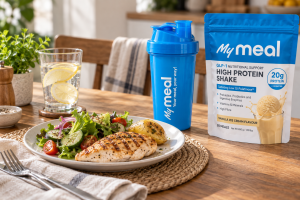
Instead of waiting until dinner to think about protein, try including a source throughout your day.
Simple options include:
- Eggs
- Greek yoghurt
- Cottage cheese
- Chicken
- Fish
- Lean meat
- Beans and lentils
- Tofu
- Milk
- A suitable high-protein shake
Your personal protein needs can differ depending on your age, weight, activity and health. People with kidney disease or other medical conditions should speak to their healthcare professional about an appropriate protein intake.
Do I need to exercise every day?
No.
Consistency matters more than trying to do everything at once.
If you’re new to resistance training, start with exercises you can perform safely and build from there.
Walking, swimming, cycling and other cardiovascular exercise are also valuable for health. Strength training simply adds something different: it asks your muscles to work against resistance.
A balanced exercise routine can include both.
What does the latest science say?
What we know: Some lean tissue loss commonly happens during significant weight loss. Protein and resistance exercise are important tools for supporting muscle health.
What researchers are still studying: Scientists are still learning exactly how different GLP-1 medicines affect muscle size, muscle quality, strength and physical function over the long term.
This means headlines saying that GLP-1 medicines simply “eat your muscle” are too simplistic.
The science is more complex.
The better message is:
Don’t only focus on losing weight. Focus on staying strong too.
5 simple ways to support your muscles
- Include protein in your meals.
- Add resistance training to your week.
- Don’t rely on the scale alone to measure progress.
- Stay physically active during your weight-loss journey.
- Give your body enough good-quality nutrition, even when you’re eating less.
Where does My Meal fit?
When appetite is reduced, reaching your daily nutrition goals can sometimes feel harder.
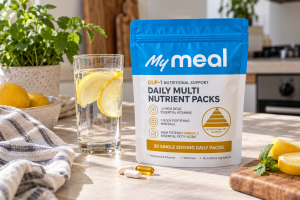
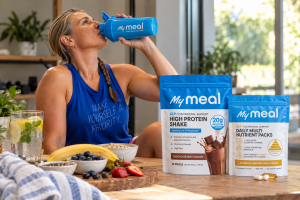
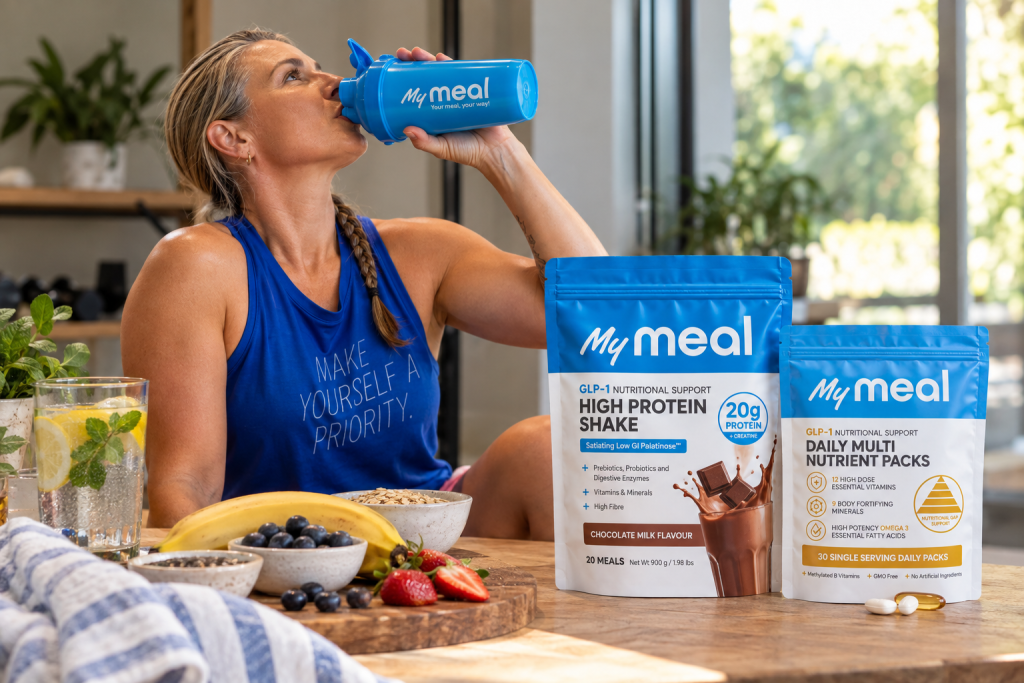
The My Meal High Protein Nutrition Shake provides 20 g of protein per serving, together with 3 g of creatine monohydrate, dietary fibre, prebiotics and probiotics, vitamins and minerals.
It offers a convenient way to add protein and nutrition when your appetite or meal size is smaller.
My Meal doesn’t replace a balanced diet, resistance exercise, medical care or prescribed treatment.
It’s designed to help make good nutrition easier to manage.
Don’t just lose weight. Build habits that help you stay strong.
Key search questions answered: Do GLP-1 medications cause muscle loss? Should you strength train on a GLP-1? Why is protein important on a GLP-1? What exercise should you do while taking a GLP-1?
Research References
- 2026 systematic review and meta-analysis of lean-mass changes during incretin therapy and lifestyle interventions.
- 2026 review of muscle preservation, nutrition and resistance training in GLP-1 treatment.
- Joint expert advisory on nutritional and lifestyle priorities during GLP-1 therapy.
This article reflects a 2026 meta-analysis of 15,782 participants, plus recent reviews and the multidisciplinary GLP-1 nutrition advisory.
Research links: 2026 lean-mass meta-analysis · 2026 muscle and metabolic health review · GLP-1 nutritional priorities advisory